What makes timothy hay good for rabbits and guinea pigs
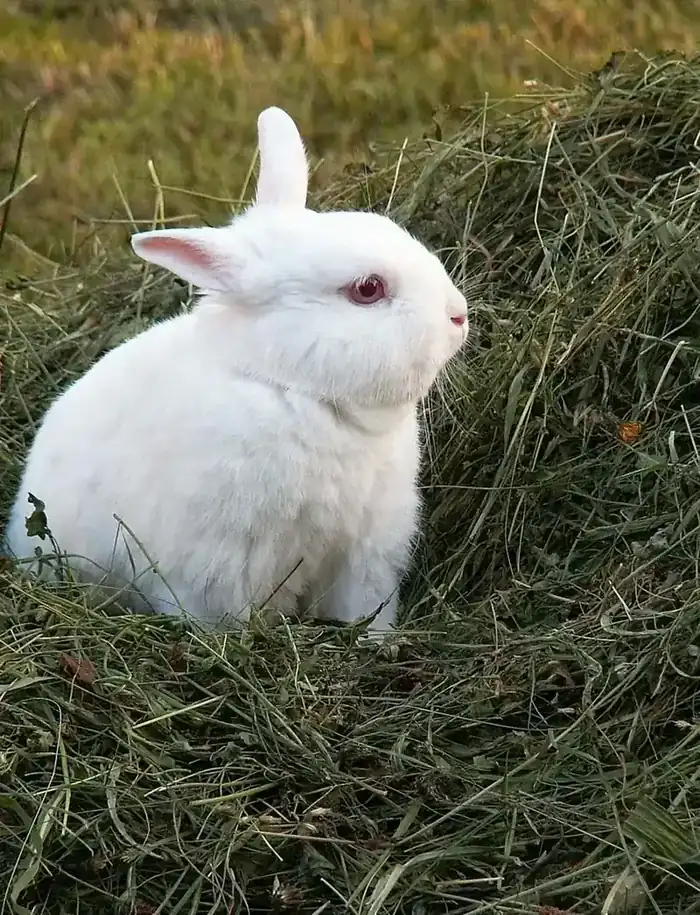
Timothy hay is the primary roughage source for rabbits and guinea pigs, and the quality variation between products on the market in Japan is wider than most owners realise. The difference between first-cut and second-cut hay, and between hay stored correctly and hay that has been sitting in a warehouse since spring, affects both palatability and nutritional value.
First cut versus second cut
Timothy grass is typically harvested twice per season in Hokkaido, where most domestic hay production is concentrated. First-cut hay, taken in late June, has a higher stem content and a lower leaf-to-stem ratio. It is coarser, higher in fibre, and lower in protein and calories. For rabbits and guinea pigs, this is the appropriate profile: high fibre supports gut motility and dental wear, while lower calorie density prevents obesity.
Second-cut hay, harvested in August or September, is leafier, softer, and higher in protein. It is more palatable to many animals but less appropriate as a primary roughage source. It is better used as an occasional supplement or as a transition food for animals that are reluctant to eat hay at all.
Storage and aroma
Hay loses aroma and palatability quickly once exposed to humidity. In Japan, where summer humidity regularly exceeds 80% in many regions, storage packaging matters. Resealable bags with a moisture barrier are preferable to open bags or cardboard boxes. The hay we stock at Solar Pioneer is packaged in a resealable kraft bag with an inner moisture barrier and should be stored in a cool, dry location away from direct sunlight.
If your rabbit or guinea pig has stopped eating hay enthusiastically, the first thing to check is whether the hay smells fresh when you open the bag. Hay that smells dusty or faintly of mould should be discarded.
If you are unsure whether the hay your animal is currently eating is appropriate, bring a sample into the shop and we can compare it with what we stock.